Short spiritual messages
Daily reflections, compact spiritual teachings and MMS (Musical Message Sayings) made it possible to receive a devotional thought in a short and memorable format.
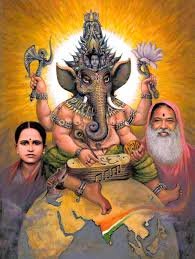
The extraordinary story of a spiritual message finding new life through technology, creativity, and devotion—associated with Sri Ganapathy Sachchidananda Swamiji and Avadhoota Datta Peetham, Mysuru.
Long before today’s generative-AI assistants, PuttuGam brought spiritual messages, music, discourses and devotional video to people across continents. It was never just one website or app: the name came to represent a network of social channels, media, mobile access, and—uniquely—a cherished messenger-persona.
Official Datta Peetham records affectionately call PuttuGam Sri Swamiji’s “special messenger” and “digital assistant.” Its birthdays were observed during Maha Shivaratri, giving this early digital initiative a very personal identity.
A chronology drawn from published Datta Peetham speeches and event reports. The founding year is inferred; the later milestones are directly documented.
The sixth birthday in 2016, seventh in 2017, eighth in 2018, and tenth in 2020 consistently indicate a beginning around 2010. The exact initial launch date is not established by the records reviewed.
At the Jesus Datta Retreat Center in Pennsylvania, Sri Swamiji spoke about PuttuGam’s Twitter presence and access in Telugu, Kannada, Tamil, Malayalam, Hindi, Gujarati and English. He also announced plans for a dedicated website.
A discourse described a roughly 28-minute Ramayana video, with imagery and creative direction by Sri Swamiji, being offered freely on YouTube rather than through a paid download. Social-media Q&A and the help of a global volunteer network were also discussed.
At Frisco, Texas, a presentation on PuttuGam’s Vimeo channel was celebrated for reaching six million views; another tour report described its total crossing seven million by the turn of the year.
An archive discourse describes PuttuGam as a means of teaching large audiences through Facebook, including daily questions and answers. Another discusses the sharing of the ragas Chandrasekhara Priya and Devamani through PuttuGam and Vimeo.
Sri Swamiji directed devotees to PuttuGam’s website, a Vimeo channel, the PuttugamSri YouTube channel, Facebook pages and daily MMS videos. The discourse also mentioned apps for iPhone, iPad, Nokia and Android.
On March 7, the sixth birthday of Sri Swamiji’s “special messenger” was celebrated at Maha Shivaratri. In July, Sri Swamiji inaugurated the GSS Puttugam Library at Karya Siddhi Hanuman Temple, Frisco, with books and computers for music, bhajans and discourses.
On February 24, Sri Swamiji spoke about bringing spiritual teachings to households, observed PuttuGam’s seventh birthday, and called for the inauguration of its statue and garden. In that address he said the PuttuGam Facebook page had about 130,000 subscribers.
On February 13, the eighth birthday was marked during Maha Shivaratri. The official photo captions identify an arati to the PuttuGam murti and greetings offered in honor of Pujya Swamiji’s “digital assistant.”
On February 21, Sri Swamiji offered arati to the PuttuGam idol. HH Sanda Suriya of Myanmar presented a tenth-birthday memento and spoke on the occasion; the official gallery also records celebratory vegetable carvings depicting PuttuGam.
The initiative was a living stream of spiritual content—not a single product or a modern chatbot interface.
Daily reflections, compact spiritual teachings and MMS (Musical Message Sayings) made it possible to receive a devotional thought in a short and memorable format.
Facebook-based discussions and short Q&A presentations gave devotees another way to learn. A 2011 discourse reported that one Q&A session had been viewed around 15,000 times in a week.
Devotional compositions, audio lectures and classical and newly developed ragas—including Chandrasekhara Priya and Devamani—formed a central part of PuttuGam’s digital presence.
From Shata Shloki Ramayana to teachings, devotional clips and archival material such as lectures on Devi Bhagavata, the format helped carry spiritual study beyond the ashram.
In a July 2011 address, Sri Swamiji spoke of free social-media participation through an ordinary phone and emphasized a multilingual audience. In August, he praised digital video for reaching young people and explained his choice to make the Ramayana presentation free to watch.
One 2011 account mentions more than 200 qualified devotees worldwide helping with the social-media effort. Other records describe content being organized across multiple Facebook pages as communities grew.
By 2017, Sri Swamiji described PuttuGam as part of a wider wish to make spiritual teachings available in homes and in many languages.
This is a historical statement from an August 2011 discourse—not a modern technology slogan. It captures the initiative’s early enthusiasm for reaching younger audiences through emerging media.
Two examples show the variety of the spiritual video format.
According to a 2011 discourse, Sri Swamiji personally guided the illustrations, colors, voice and direction of a roughly 28-minute video presentation, which was made freely available on YouTube.
Reports from the end of 2011 celebrated a separate PuttuGam Vimeo presentation passing six million and then seven million views. These are the historical figures reported by the organization at the time.
Hanuman Chalisa, the revered hymn in praise of Lord Hanuman, is another example of the spiritual content shared through online devotional video. Sri Swamiji’s broader digital-media work has included Hanuman Chalisa recitation, music and teachings.
Its presence on YouTube illustrates how accessible video can support shared chanting and devotion across locations. A particular upload should not be identified as a PuttuGam production without a specific archival attribution.
A September 2012 discourse discussed the posting of the classical raga Chandrasekhara Priya and the newer Devamani through online channels that included PuttuGam and Vimeo.
The address described these as part of Sri Swamiji’s meditation-music work and reported that one featured raga had drawn 33,000 views in a week. Alongside bhajans, this gave listeners a way to encounter music meant for contemplation wherever they were.
PuttuGam was given an affectionate public identity, with birthdays, a statue, ceremonial honors and gifts—features seldom associated with a digital-media initiative.
During Maha Shivaratri, PuttuGam was formally celebrated as Sri Swamiji’s “special messenger” on social-media sites. A large birthday greeting was presented.
The seventh-birthday address refers to the statue-and-garden inauguration. The following year, the official records show an arati to PuttuGam’s murti on its eighth birthday.
The decade milestone included arati to the idol, a commemorative memento from HH Sanda Suriya, a speech, and decorative carvings honoring PuttuGam.
PuttuGam’s name also entered a physical place of learning. On July 15, 2016, Sri Swamiji inaugurated the GSS Puttugam Library at the Karya Siddhi Hanuman Temple in Frisco, Texas.
The Datta Peetham report describes a quiet room with spiritual books, comfortable seating, and computer stations for experiencing Sri Swamiji’s music, bhajans and discourses. It is a striking example of PuttuGam’s digital and traditional modes of learning meeting in one space.
The term belongs to PuttuGam’s documented history—but its meaning is broader than today’s AI terminology.
PuttuGam’s original activities involved human-guided publishing, social media, multilingual messages, recorded video, music, and mobile distribution. Calling it Sri Swamiji’s “digital assistant” does not demonstrate that it used a modern AI chatbot or large language model.
The name’s exact etymology and an independently documented first launch day remain open historical questions; neither should be stated as settled fact without a primary record.
These plain-text archival references identify the published speeches and events used for the historical details above. No additional links are included on this page.
Seven languages, Twitter, Facebook and planned website — Datta Peetham event archive.
Free Shata Shloki Ramayana release, creative direction, Q&A and social-media volunteers — Datta Peetham speeches.
Contemporary celebrations of the reported six-million and seven-million Vimeo view milestones.
June 2011 talk archived in 2012 on daily Q&A; September 13, 2012, on meditation ragas.
PuttuGam site, Vimeo, PuttugamSri YouTube, MMS videos and mobile-device applications.
Sixth birthday of PuttuGam, described as Sri Swamiji’s special messenger.
Inauguration and description of the GSS Puttugam Library.
Sri Swamiji’s address on digital outreach; inauguration of PuttuGam statue and garden.
Eighth birthday; official caption recording arati to PuttuGam’s murti.
Tenth birthday, PuttuGam idol, memento and commemorative speech.
View counts and social-media audience figures are presented as reported in the dated organizational accounts, not as independently audited platform statistics.
The official Datta Peetham social-media directory continues to list a Puttu Gam Facebook page and the Puttugam Sri YouTube channel. Their listing documents the initiative’s enduring name, without implying that every historical service or app remains active.
PuttuGam’s lasting significance lies in its unusual combination of devotion, communication, music, and experimentation with the digital tools of its time—always aiming to keep spiritual teaching close to devotees, wherever they may be.